Showing posts with label museum. Show all posts

Tuesday, June 16, 2020

32. History in art: Arms and the Men

Continued from   https://conant400.blogspot.com/2020/06/painting-from-history-two-artists-at.html


Budleigh resident Nick Speare as The Sailor in the 2018 ‘The Boyhood of Raleigh’ re-enactment by Fairlynch Museum volunteers. Photo credit: Rob Coombe   

Still remembering that swelteringly hot day in May 2018 when we re-enacted ‘The Boyhood of Raleigh’ on Budleigh beach, I’m continuing to relate John Washington’s sketch to Millais’ masterpiece.


Young Walter as portrayed in Millais’ The Boyhood of Raleigh

As Millais and every artist knows, hand and arm gestures play a key role in their work, guiding the viewer to a certain conclusion. Young Walter’s gaze is internalised, fixed on the world of his imagination, thousands of miles distant from what we actually see in the painting. He seems to be looking through the sailor rather than at him.


The Boyhood of Raleigh, on show for the third time at Budleigh Salterton’s Fairlynch Museum, on loan from Tate Britain

The sailor’s words and above all that outstretched arm were the stimulus for that imagination. Now, in turn, it takes ‘The Boyhood’s’ Victorian audience beyond the horizon to inspire them – and particularly young boys – with thoughts of creating an even greater British Empire. 

‘The sailor’s arm points into the distance, taking the eye out of the main frame and implying a world of romantic adventure beyond its confines,’ comments Professor Linda Dryden in her book about the novelist Joseph Conrad.


In John Washington’s sketch, above, depicting a celebrated incident on Fishermen’s Field at Cape Ann, near Gloucester MA, Roger Conant is the central figure. 

To his right is Captain John Hewes, who had been sent with sailors and fishermen by West Country investors in an attempt to claim abandoned assets of the bankrupt Dorchester Company, especially the barrels of salt, an expensive commodity. 

To Conant’s left is the diminutive Captain Miles Standish - rudely named 'Captain Shrimp' by his enemies - and a troop of armed marines who had been sent by Governor Bradford from the Plymouth Colony to protect what it saw as its assets. 


Conant’s arm, the palm of his hand open in sign of friendship, keeps the viewer firmly within the frame and focused on the smiling central figure. I notice that it’s his left hand that he extends to Standish. Was he left-handed? Who knows. 

His right hand firmly clasps a book. Perhaps it’s a folder of legal documents which he has consulted. As Gloucester historian Mary Ellen Lepionka explains, ‘According to accounts of the 1625 confrontation, Hewes and his men barricaded themselves behind barrels of salt in the flake yard and Standish threatened to open fire on them, when Roger Conant and company “rushed from their huts” (modified wigwams with chimneys instead of smoke hole) to explain that by English law everything in Fishermen’s Field was still Dorchester Company property pending the outcome of bankruptcy proceedings’.


The statue of Roger Conant outside the Witch Museum, Salem, Massachusetts
Photo credit: Kate Fox

Smiling in contrast with the rather grim-faced statue of Roger Conant that is one of Salem’s landmarks.

The sketch marks a crucial point in time and hints at a few seconds of suspense. Conant’s gesture is open and friendly, but Standish has not responded. He looks nonplussed. His background is military and he is a man of action. Will he give the order to the heavily armed soldiers behind him to open fire on the fishermen and sailors? The latter’s gestures – clenched fists and pointing fingers – are openly defiant and hostile.


An artist’s image of Captain Miles Standish from The Courtship of Miles Standish, an 1858 narrative poem by American poet Henry Wadsworth Longfellow.  The American artist N.C. Wyeth was known for his illustrations of The Last of the Mohicans (1826) and Treasure Island (1883).

How will the situation be resolved? This moment could easily have been the start of an early civil war between white settlers in America? By 1625, when the incident took place, Captain Miles Standish, one of the most prominent in the group of Plymouth Puritan separatists who had sailed on the Mayflower, had proved that he was capable of extreme violence.

Continued at https://conant400.blogspot.com/2020/06/33-kind-of-ruffling-course-in-world.html


You can access other posts on this blog by going to the Blog Archive (under the ‘About Me’ section), and clicking on the appropriate heading.




Friday, November 22, 2019

11. Coming Home to Budleigh: Jeff Conant's 2016 visit to his old village home (2) - some photos


During his visit to East Budleigh in 2016 Jeff saw the millstone from the village mill which his ancestors owned five centuries ago.  The Conant stone is outside the Church Hall, overlooking the village car park on Hayes Lane. . 


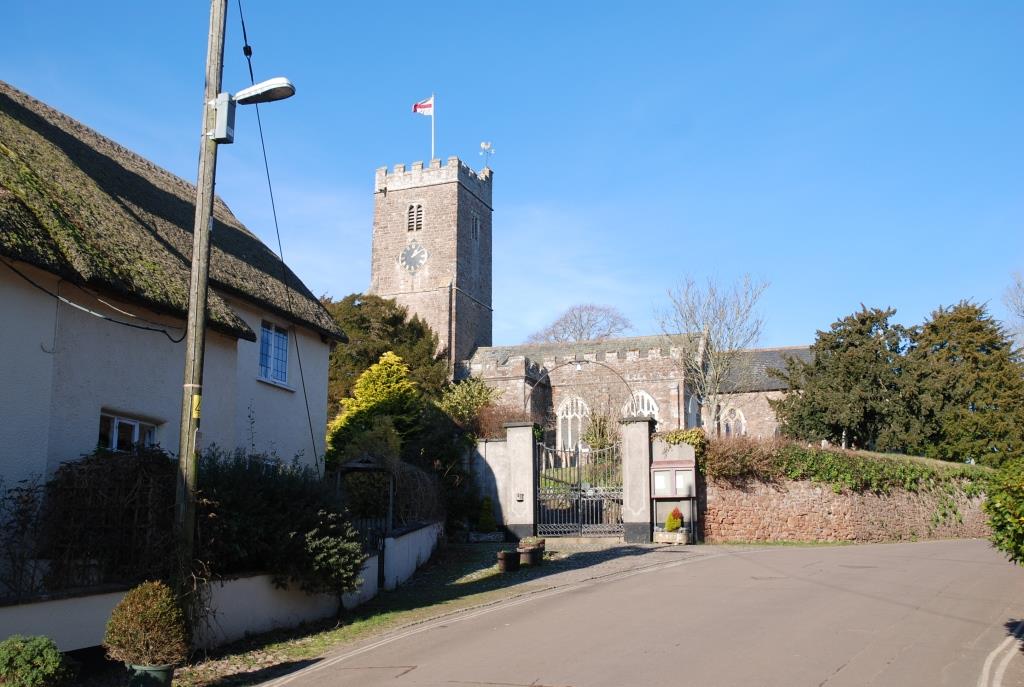
A must-see in East Budleigh is All Saints Church, where the families of Sir Walter Raleigh and Roger Conant worshipped. Both Sir Walter's and Roger's fathers were churchwardens. The church's 16th century carved oak bench ends are famous. 


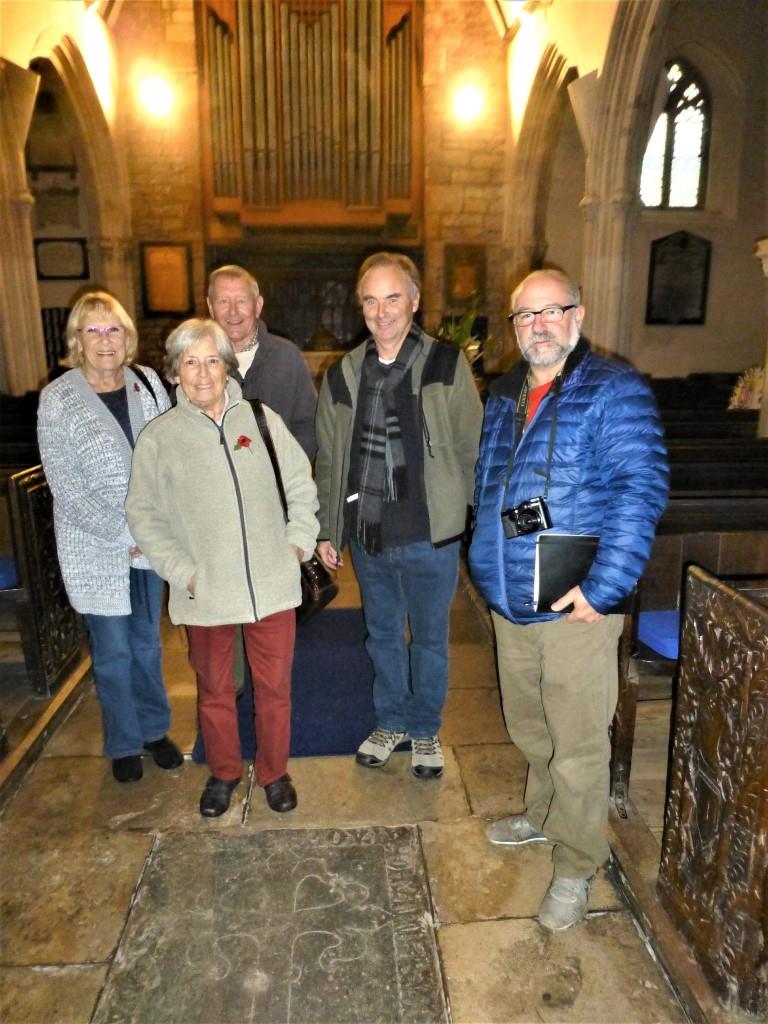
Jeff's guides during his tour of the village were l-r: Trevor Waddington (Chairman of Fairlynch Museum), local resident and All Saints Church expert Hanneke Coates, Roz Hickman (Head of Local History at Fairlynch Museum) and Anthea Downes (museum volunteer)


The Conant family pew at All Saints Church. 


In All Saints Church, looking at the nave where Sir Walter Raleigh's stepmother Joan Drake is buried.


Jeff enjoyed meeting Hanneke Coates and hearing her stories of All Saints Church and the village where she has lived for many years. 

There are many more photos - much finer than mine -  taken by Jeff during his few days in the Budleigh area. You can see them at https://qq0u.app.link/e/DIObyp1GNR

Continued at https://conant400.blogspot.com/2019/11/coming-home-to-budleigh-jeff-conants_24.html

You can access other posts on this blog by going to the Blog Archive (under the ‘About Me’ section), and clicking on the appropriate heading.

Tuesday, November 12, 2019

9. Why did Jeff Conant fly 5,286 miles from Berkeley, CA. to visit us last month?


Hands across the Pond: Jeff Conant, a descendant of Roger Conant, founder of the American city of Salem MA, contemplates his family's ancient millstone during his 2016 visit to the UK. It's all that remains of the Mill House, East Budleigh 

This article by David Daniel, History Coordinator for the Otter Valley Association, was published in the OVA Newsletter, January 2017.   

Sir Walter Raleigh is well known but few outside East Budleigh may know of his contemporary, Roger Conant. Roger was born in the Mill House, East Budleigh, on 9th April 1592 (since demolished but just above Hill Farm). He was the youngest son of Richard Conant, miller, who had married into one of the leading merchant families of Colyton. Bother Roger’s and Walter’s fathers were Church Wardens and both families have their crests carved on bench ends in All Saints’ Church.

As the youngest son of a family of eight, Roger couldn’t expect a share of his father’s estate. In 1610, or soon after, Richard followed his brother Christopher to London. Christopher became a member of the Grocers’ Guild and merchant. Roger became a salter, a trade concerned with preserving meat and fish, not to be confused with salt production. By 1618, the year Sir Walter was beheaded, Roger was well enough established to marry Sarah Horton in Blackfriars. Having lost their first child in 1619, their second child, Caleb, was born in May 1622.

So why did Roger, with his wife and baby son, set sail for New England in 1623 and eventually become the founder of Salem, Massachusetts?

Religious, political and trading conditions were changing adversely under James I. Roger was a puritan by inclination, as were some of his ordained brothers, though not a separatist (or dissenter). In 1622 three influential sermons on the subject of colonization were published. The plantation colonies of: Jamestown, Virginia (1607); and Plymouth, New England (1620) were beginning to succeed. The Plymouth Colony was well placed to supplement the century old cod fishing industry that Merchant Venturers were keen on extending throughout the year, providing opportunities for a salter. Forty vessels sailed to New England in 1623, the Conant family in one of them.

They spent their first year in the Plymouth Colony founded by pilgrim separatists who originated from Nottinghamshire but became disillusioned by the factions within the community. After a year in more congenial company in Boston Bay they moved northward to Cape Anne where Roger became the manager of the “fishing plantation” set up on speculation by “The Dorchester Company”. This Company failed and when the next boat arrived from England, Roger learned that a new Company had taken over. He was offered free passage home but instead led a small group of seasoned settlers to an abandoned Native American settlement, Naumkeag. Further funds and provisions were raised in England and in a 1626 Thanksgiving Ceremony it was renamed Salem. Roger's leadership provided the stability to survive the first two years, but he was replaced as Governor in 1628 by John Endecott, one of the new arrivals at the start of the mass migration, by order of the Massachusetts Bay Company.

From time to time descendants of Roger and Sarah Conant visit East Budleigh. Jeff (pictured) is the latest. He stayed at the King’s Arms, Otterton; took part in a quiz night; was shown around East Budleigh by members of the OVA and Fairlynch Museum; and enjoyed some hospitality in the Sir Walter Raleigh. Jeff is the Forestry Programme manager for Friends of the Earth and already knew all about our Beavers!

(Main history source: Roger Conant, A Founder of Massachusetts, by Clifford K. Shipton, © 1944, Harvard College, USA)
Article reproduced courtesy of the Otter Valley Association www.ova.org.uk 

You can access other posts on this blog by going to the Blog Archive (under the ‘About Me’ section), and clicking on the appropriate heading.